
AddressNear to Gulf Asian Hospital Eastern Region Al Jubail, Kingdom Saudi Arabia.
E-mail
info@reddune.org
Phone +966 53 905 3929
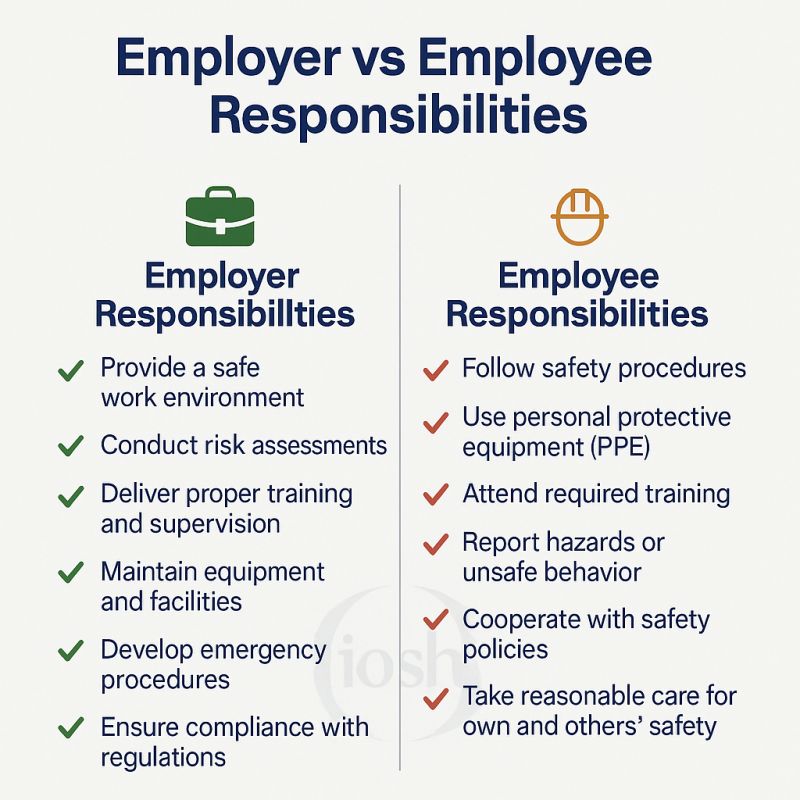
Employer Responsibilities The employer controls the workplace, so the larger share of responsibility sits here. They are expected to provide a safe working environment. That includes proper planning of tasks, identifying risks before work starts, and putting controls in place. If hazards are predictable and still exist, that reflects directly on management. They must supply safe equipment and ensure it is maintained. Faulty machinery or poorly maintained tools are not just technical issues, they are safety failures. Training is another core duty. Workers cannot be expected to act safely if they are not properly trained. This includes task-specific training, emergency procedures, and clear instructions. Supervision is also critical. Even trained workers can drift into unsafe behavior without proper oversight. Regular inspections and enforcement of rules are part of this role. Employers are also responsible for providing personal protective equipment and making sure it is used correctly, not just issued and forgotten. Finally, they must create a reporting system where workers can raise safety concerns without fear. If workers stay silent, risks grow. Worker Responsibilities Workers are not passive. They are directly exposed to risk, so their role is practical and immediate. They must follow safety procedures and instructions given by the employer. Ignoring procedures, even for speed or convenience, creates unnecessary risk. Using equipment properly is another key duty. Misuse of tools or machinery is a common cause of accidents, even when the equipment itself is safe. Workers are expected to use the provided protective equipment correctly. PPE only works when it is actually worn and used as intended. They also have a responsibility to report hazards, unsafe conditions, or near misses. Staying silent shifts risk to everyone on site. Another important point is that workers must avoid actions that could endanger others. Safety is not just personal. One unsafe act can affect the entire team. The Reality It is often assumed that accidents happen because workers make mistakes. That is only part of the picture. Many worker errors trace back to poor systems, weak training, or lack of supervision. At the same time, blaming only management ignores the fact that workers make daily choices on site. Even in a well-managed environment, unsafe behavior can still cause incidents. In practice, safety works only when both sides do their part at the same time. One strong side cannot fully compensate for a weak one.