
AddressNear to Gulf Asian Hospital Eastern Region Al Jubail, Kingdom Saudi Arabia.
E-mail
info@reddune.org
Phone +966 53 905 3929
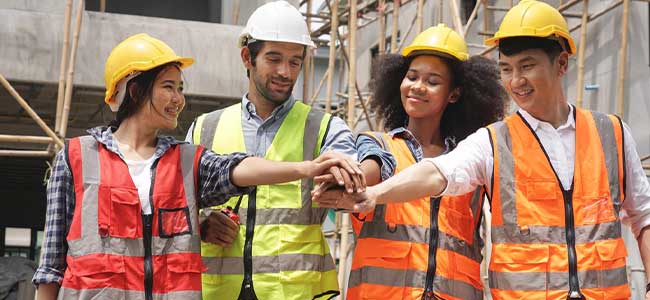
Workplace safety culture in construction is not about rules on paper. It is about how people actually behave when no one is watching. In a high risk environment like construction, that difference decides whether a site runs smoothly or ends in accidents, delays, and losses. A strong safety culture means safety becomes a shared value, not just a requirement. Workers follow procedures because they believe in them, not because they fear penalties. Supervisors do not ignore shortcuts to save time. Management does not treat safety as a cost, but as part of operational control. When this alignment exists, the entire site works with consistency and fewer surprises. Construction projects involve constant movement, heavy equipment, changing conditions, and multiple subcontractors. Without a solid safety culture, even small gaps in communication or discipline can lead to serious incidents. A culture-focused site reduces these gaps because people actively look out for risks, report issues early, and correct unsafe behavior before it escalates. There is also a direct link between safety culture and productivity. Poor safety leads to accidents, and accidents lead to work stoppage, investigations, equipment damage, legal exposure, and reputation loss. On the other side, a site with a mature safety culture runs more predictably. Work continues without interruption, coordination improves, and overall efficiency increases. Another important aspect is accountability. In weak safety environments, responsibility is often pushed down to workers. In strong safety cultures, responsibility is shared across all levels. Management sets the tone, supervisors enforce standards, and workers participate actively. This balance creates trust, which is critical in high risk operations. Safety culture also reflects in decision making. When schedules are tight, a weak system sacrifices safety to meet deadlines. A strong culture maintains standards even under pressure. This consistency is what separates short term gains from long term stability. In construction, hazards cannot be fully eliminated, but behavior can be controlled. Safety culture is the mechanism that controls that behavior. Without it, even the best procedures fail. With it, even complex and high risk projects can be executed with discipline and reliability.